The Benefits of Pre-Engineered Footings
How Diamond Pier helps builders avoid the risks of unpredictable field variables.
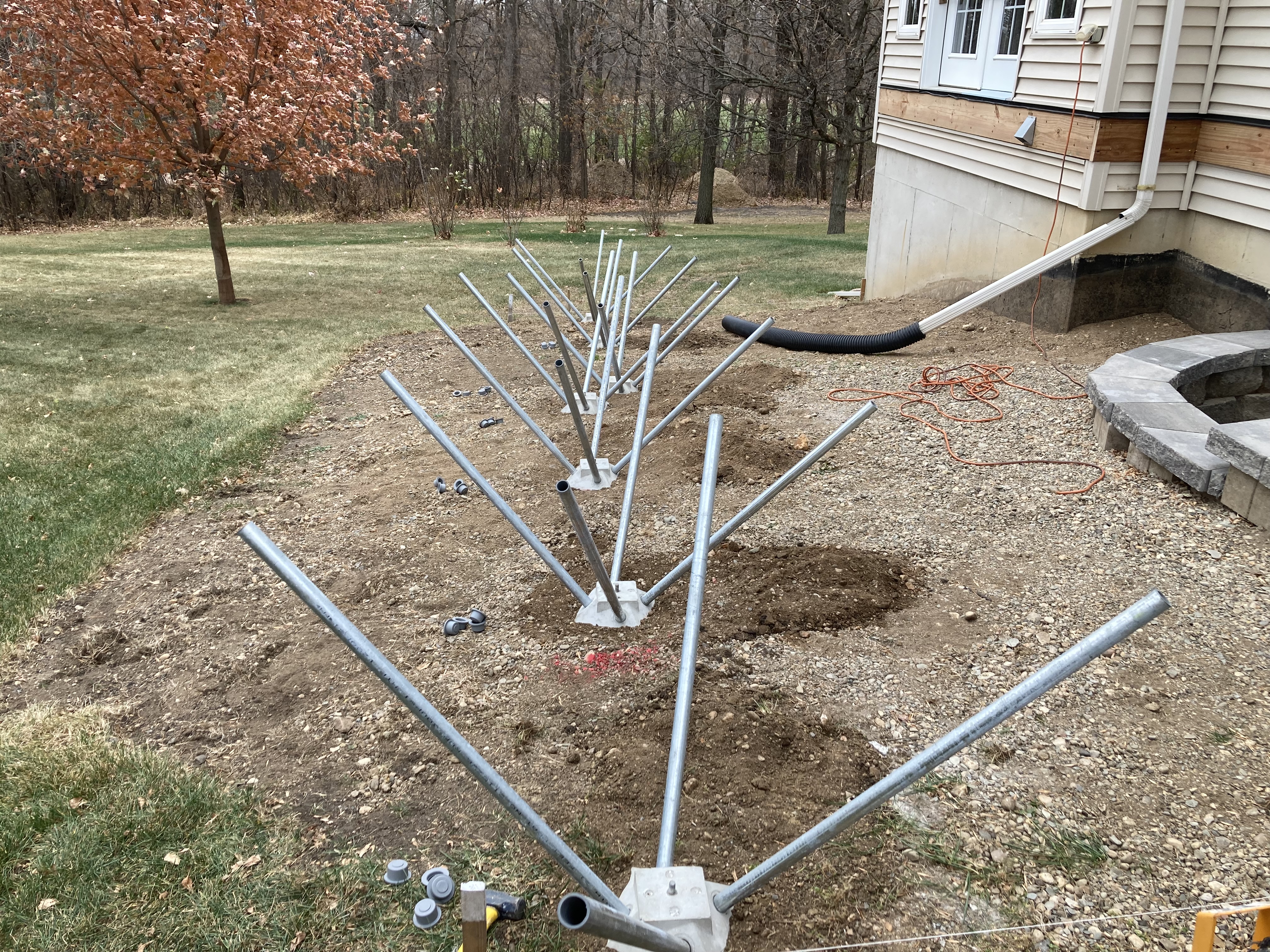
When constructing a residential deck, the foundation serves as the vital support for the entire structure. A strong and stable foundation not only ensures the safety of the deck but also contributes to its longevity and the homeowner’s enjoyment. Deck builders typically have three footing options: Diamond Pier Foundations, dig & pour concrete footings (i.e., Sonotubes) and precast concrete pedestal footings. When choosing the appropriate footing for a project, it is important to consider the on-site complications that can affect how a design becomes a completed deck.
Field Variables – Placement, Strength, and Soil Compaction
Each deck project is unique. Professional deck builders and designers know that the deck plan and project location present variables that are typically addressed through residential building codes. The correct footing design for each project is determined by loading, soil strength and project location (i.e., in a frost zone, a high wind zone, a region with significant snow loads, etc.). However, when installing the foundations of a project, unpredictable field variables due to installation can interfere with engineering in the plans. These variables can disrupt accurate footing placement, concrete strength and soil compaction.
Placement
The most common issue in the field when installing footings is inaccuracy in their placement. Inaccurately placed footings do not line up with the planned load distribution that the project was designed with. These differences can come from variables met in the field like augur drift while digging for a traditional concrete footing, misplacement of an anchor bolt in a footing, or backfill around a precast pedestal footing shifting its placement. The specific engineering of the deck cannot be relied on if footings are placed incorrectly.
Concrete Strength
The strength of poured concrete is also affected by the environment in which it cures. While there are generally accepted standards for poured concrete footings, there is no way to guarantee the exact strength of concrete cured on-site, particularly in tension which provides uplift protection. Field variables such as temperature and humidity are difficult for a builder to control. Additionally, the water-to-cement ratios and curing time are not measurable upon inspection of a footing despite their effect on concrete strength. The presumptive values of a footing cured on-site are important to the loads calculated in project plans and site variances can potentially lower the concrete strength below required values.
Soil Compaction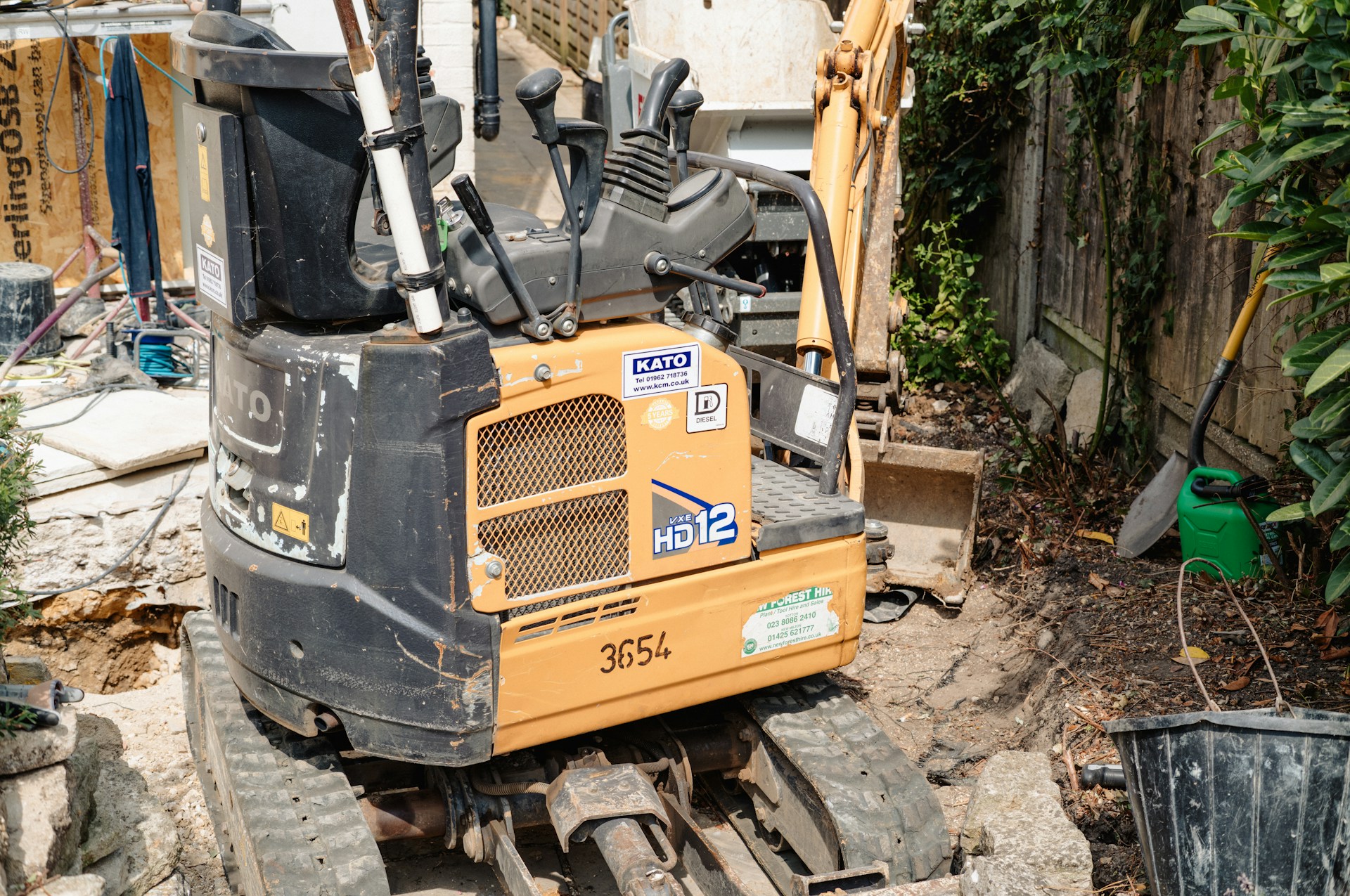
Soil compaction is an often-overlooked field variable in the deck building process. Footings that require significant excavation, such as dig & pour footings or precast pedestal footings, will need some level of soil compaction during installation. Builders experienced in their local area, as well as plan reviewers, are well aware of the soils that projects are built in and, with available information regarding a site’s soil, calculate their load distribution with the presumptive load bearing capacities of those soils in mind. Excavation and soil recompaction during footing install can alter the presumptive bearing, uplift, and lateral load capacities, interfering with the load calculations in the design.
Addressing Field Variables with Pre-Engineered Footings
To better address these unpredictable field variables, many designers and builders choose to use pre-engineered footing options, such as Diamond Pier Foundations. Diamond Pier pre-engineered footings require little excavation, meaning that the alignment of footing placements is unlikely to deviate from plans during installation. For example, installation of Diamond Pier Foundations requires only digging a small hole to cradle the concrete head before driving in its pins. All of this can be done with string lines still laid out to reference alignment during install. In addition, anchor bolts or other methods of securing brackets are guaranteed to be placed consistently on the footing.
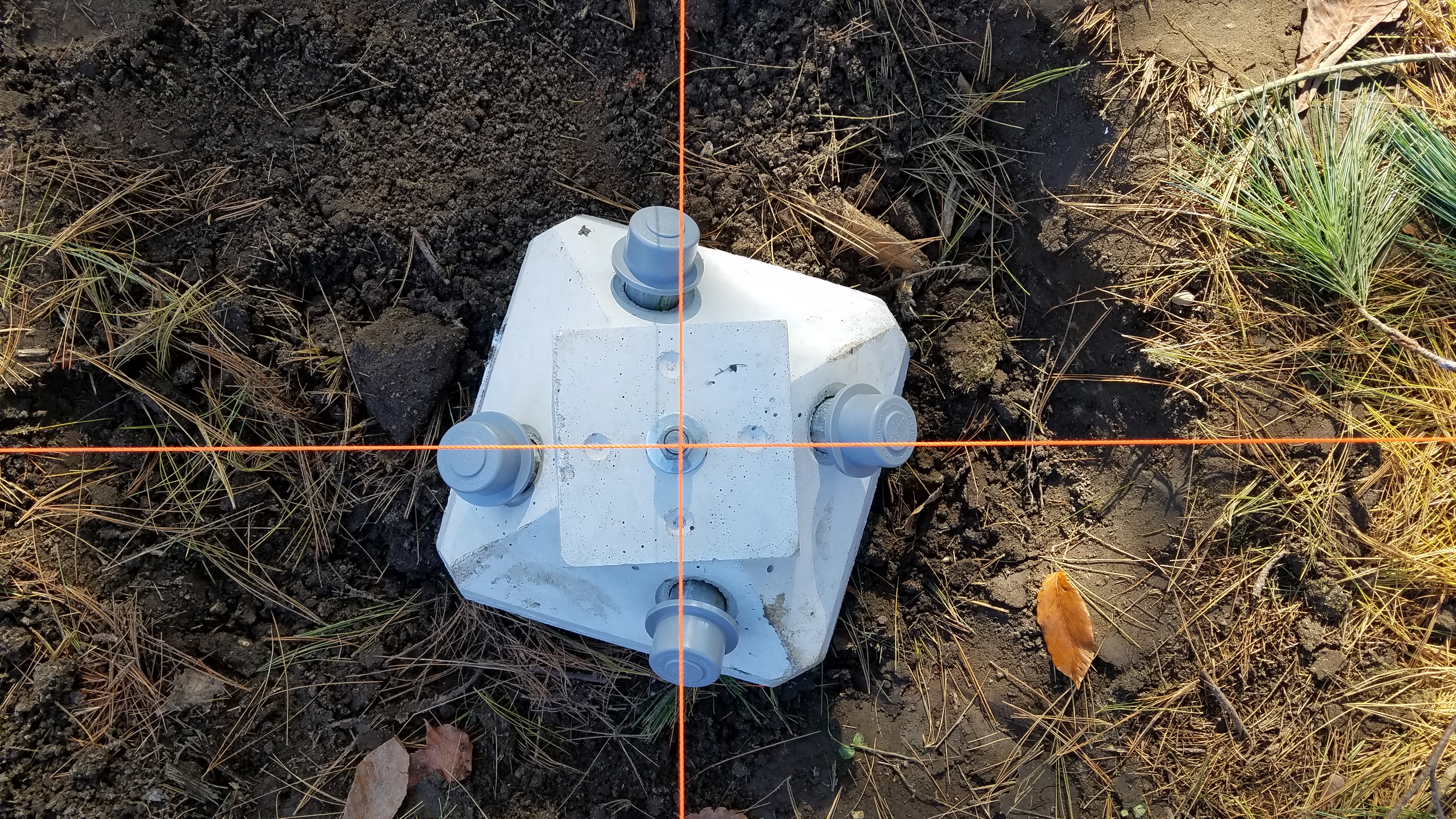
Minimizing excavation also removes the variance in soil bearing capacity caused by digging and recompacting weakening the site soil. When the soils aren’t subject to excavation stress and compaction, the site’s presumptive soil values utilized for load calculation can be relied upon. A pre-engineered footing will have tested load capacities for these presumptive soil values. The Diamond Pier’s load capacities for bearing, uplift, and lateral loads in common residential soils can be found on the Residential Diamond Pier Load Chart. Only a pre-engineered footing with testing will be able to provide consistent capacity values for all imposed loads on a project.
Perhaps the greatest benefit of pre-engineered footings comes from the quality guarantee from their manufacturers. A pre-engineered footing arrives at the project site as a complete system, quality tested by the manufacturer. Builders and inspectors can be confident that the provided strength of the footing is being met, regardless of the field variables that could affect the strength of a traditional poured footing during an install. Diamond Pier Foundations’ concrete heads are tested to a minimum strength of 5500psi and manufactured to the same tight specification in controlled and audited factories. These concrete heads also have quality control (QC) labels to facilitate quality monitoring in the field. Diamond Pier foundations are the only pre-engineered footing fully tested for all imposed loads for bearing, uplift, and lateral forces in actual 1500psf minimum soils. Stated capacities of pre-engineered footings without a correlated soil strength are meaningless. A foundation is only as strong as the soil that supports the foundation.
While it is impossible for a builder to remove every complication with a project site prior to construction, there are measures that can be taken to minimize challenges that prevent them from executing a design to perfection. One of the best ways to avoid field variables interfering with project plans is to use a reliable, pre-engineered footing like the Diamond Pier Foundation.
Diamond Pier Foundations: A Reliable Solution
Diamond Pier Foundations offer numerous advantages for professional deck builders and homeowners.
- Consistency and Strength: Every Diamond Pier Foundation is pre-engineered and structurally rated to provide consistent strength (bearing, uplift and lateral capacities) and stability in all-weather classifications. This ensures that decks and simple residential structures supported by Diamond Pier Foundations are solid and stable. Each Diamond Pier Foundation has a Quality Control label providing identification, tracking and consistent performance.
- Durability and Longevity: Constructed from high-quality, audited materials, including galvanized steel and high-strength concrete, Diamond Pier Foundations are built to withstand the test of time, resisting corrosion, rot, and decay for decades. The Diamond Pier Foundations components (high strength concrete head, embedded galvanized steel anchor bolt, galvanized steel bearing pins) are engineered to meet and/or exceed the life expectancy of the project.
- Increased Project Turns: Diamond Piers can be installed in minutes and framing can be started immediately. Unlike traditional footings that require extensive excavation, footing inspection delays, concrete pouring, cure time, and landscape remediation, the Diamond Pier Foundation can be installed quickly and efficiently using handheld tools. Builders achieve quicker project turns while ensuring the quality and strength of the foundation.
- Versatility and Adaptability: Diamond Pier Foundations can be used in a variety of soil conditions, including clay, sand, and gravel, making them suitable for most locations.
- Environmental Friendliness: Diamond Pier Foundations help preserve the natural landscape and minimize disruption to local ecosystems, water-flow and tree roots, making them the number one choice for environmentally conscious builders and homeowners. The Diamond Pier Foundation also uses significantly less concrete than conventional concrete footings. It is well known that concrete production is the third-largest source of global carbon dioxide emissions. Diamond Pier Foundations use less than 20% of the concrete used in conventional deck footings.
Diamond Pier Foundations
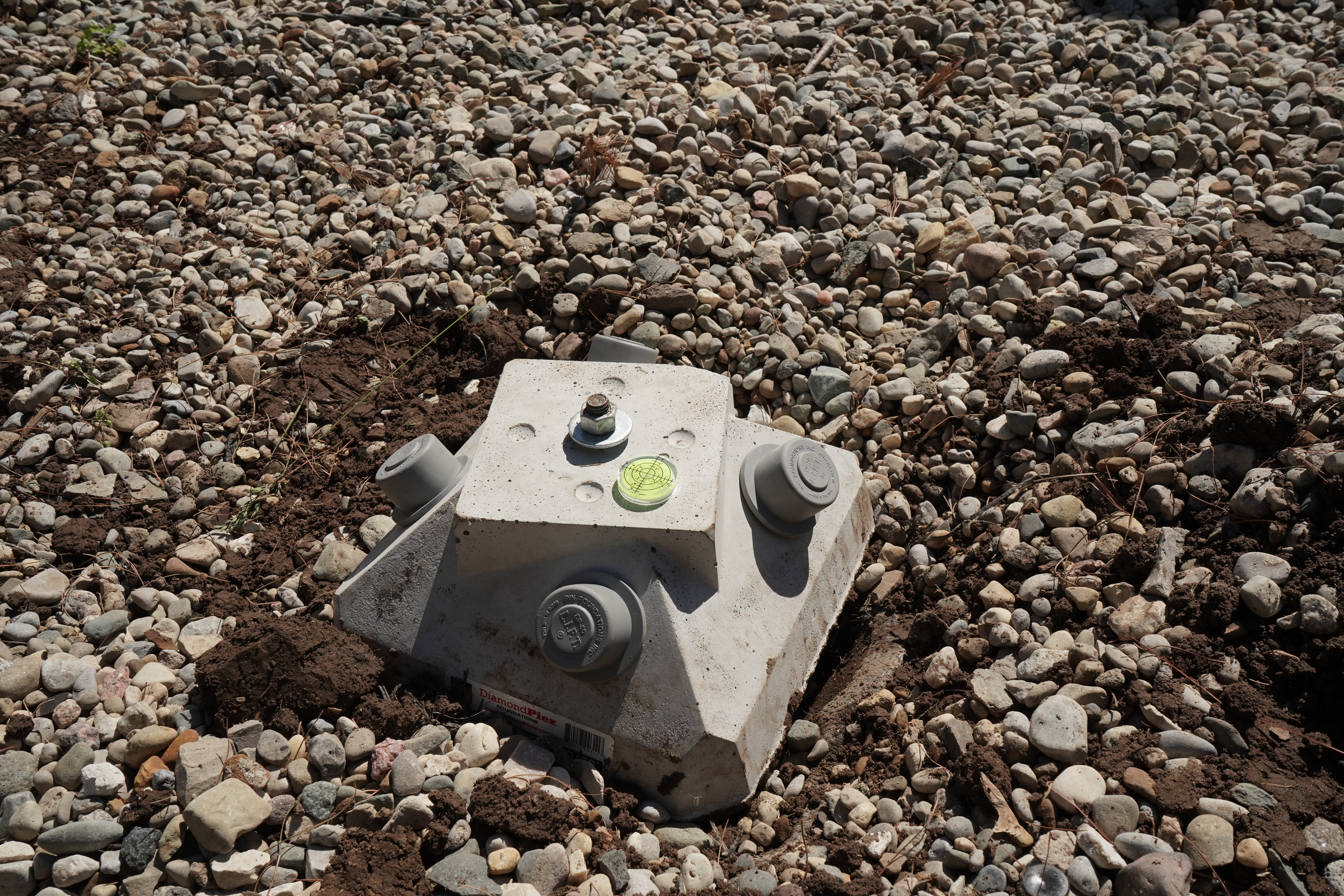
Diamond Pier Foundations are a proven and code-compliant alternative to traditional concrete footings. The system consists of a high strength, engineered, precast concrete head and four galvanized steel pipes that are driven into the soil using a standard electric jack hammer. These driven pipes lock the head into the undisturbed ground and provide the bearing force of the foundation. The galvanized steel anchor bolt embedded in the concrete head is well-suited to connect to off-the-shelf post base brackets ensuring a solid connection to the structure above.
Residential Diamond Pier Foundations are specifically engineered for decks and other simple residential projects, providing documented structural values for bearing, uplift and lateral loads. In fact, Diamond Pier Foundations are one of the only foundations fully tested to support all imposed loads per IRC section 507.3. This testing ensures stability during high wind events or other conditions that impose significant uplift and lateral forces.
Diamond Pier Foundations are code-compliant and do not require an inspection prior to installation. Additionally, inspection of Diamond Pier Foundations can be done at any point, meaning footing inspection will not delay project framing. Compliance with the latest prescriptive ICC IRC codes facilitates a smooth approval process from plan reviewers and building inspectors.
The Best Choice
For any professional deck builder, having options like Diamond Pier Foundations, dig & pour concrete footings and precast concrete pedestal footings for deck foundations is invaluable. These alternatives offer versatility and adaptability to different soil conditions and project requirements. The choice between the options largely depends on the specific project requirements and soil conditions.
Whichever option you choose, investing in a solid foundation ensures the durability of your deck project and proven performance for years to come.
Additional Considerations
High volume professional deck builders benefit greatly from using Diamond Pier Foundations. We understand the challenges of permitting, scheduling, logistics, installation, inspection and project completion. That is why we work to make sure that the Diamond Pier Foundation design and installation is as efficient as possible. The typical Diamond Pier Foundation is installed in 30 minutes or less and framing can begin immediately. Feedback from our customers confirms that using Diamond Pier Foundations saves a day or two on most projects. That adds up to substantial business growth over time. Check the Retailer Locator (https://www.diamondpiers.com/retailer-locator) to make sure your preferred building supply store is stocking the Diamond Pier.


