Common Residential Deck Footing Comparison
Compare three common residential deck foundation systems, including installation, labor, code considerations, performance, and ideal applications.
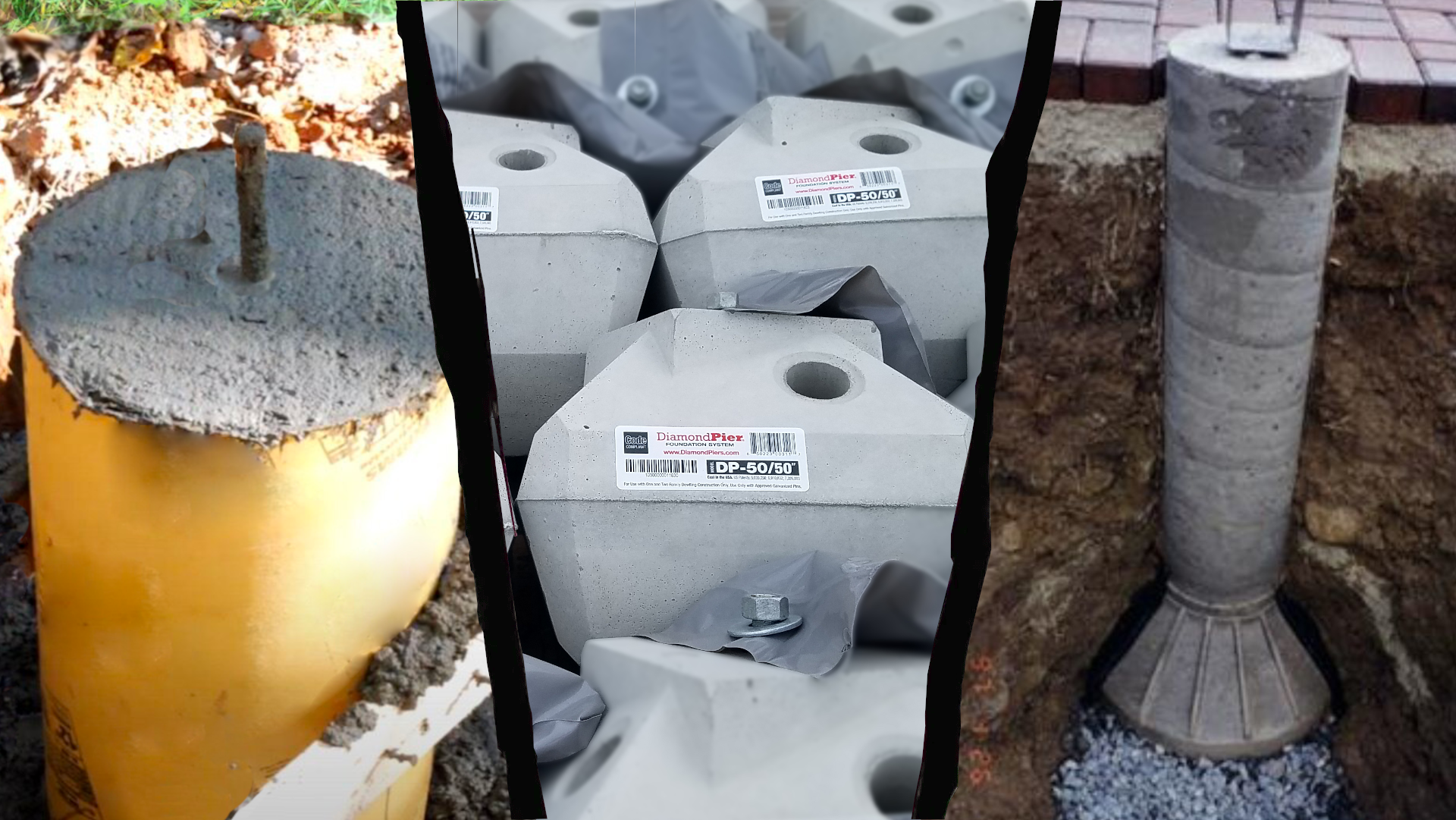
When constructing a residential deck, the foundation serves as the vital support for the entire structure. A strong and stable foundation not only ensures the safety of the deck but also contributes to its longevity and the homeowner’s enjoyment. Deck builders typically have three footing options; Diamond Pier Foundations, dig & pour concrete footings (i.e., Sonotubes) and precast concrete pedestal footings.
Diamond Pier Foundations
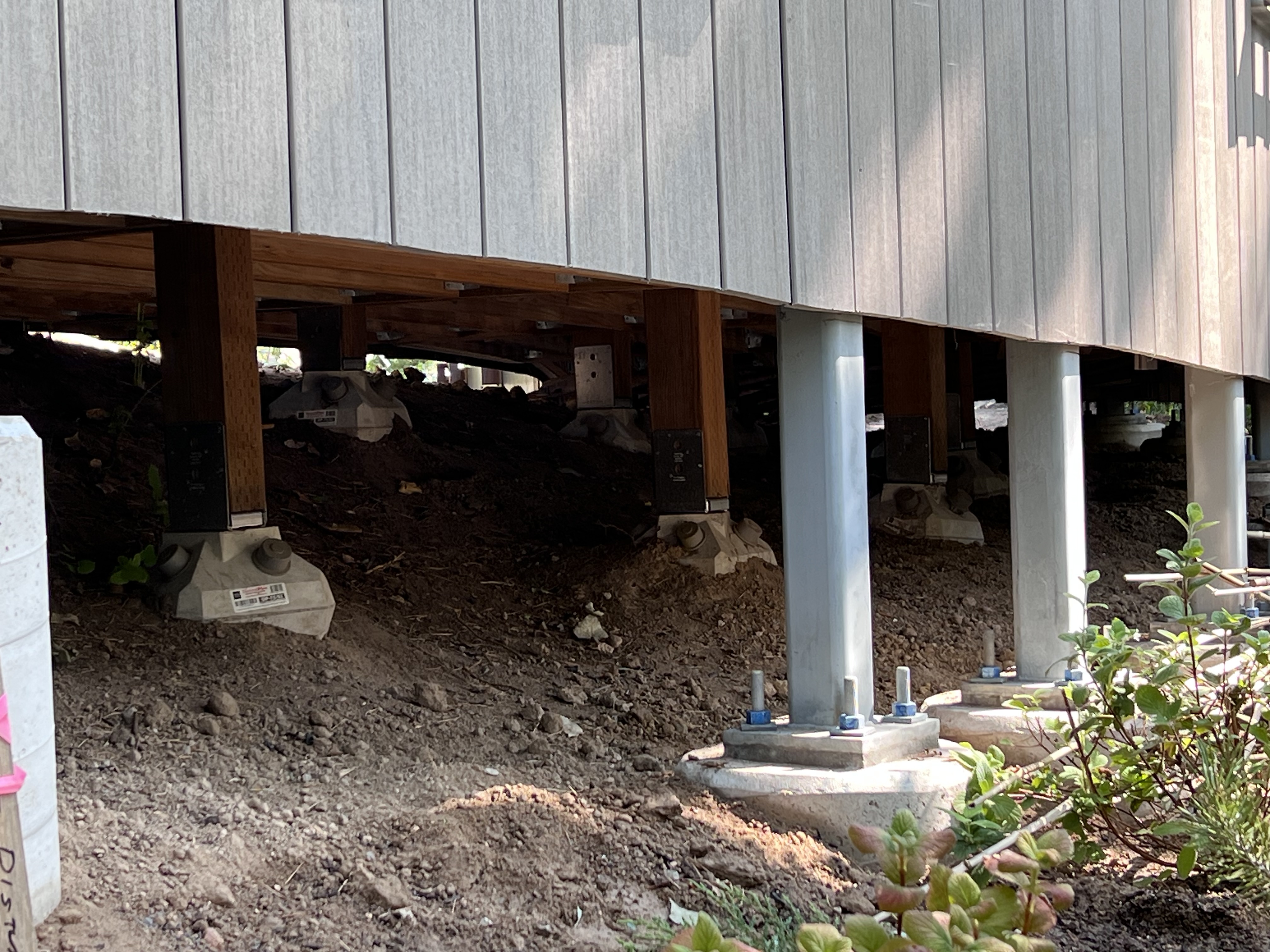
Diamond Pier Foundations are a proven and code-compliant alternative to traditional concrete footings. The system consists of a high-strength, engineered, precast concrete head and four galvanized steel pipes that are driven into the soil using a standard electric jack hammer. These driven pipes lock the head into the undisturbed ground and provide the bearing force of the foundation. The galvanized steel anchor bolt embedded in the concrete head is well-suited to connect to off-the-shelf post base brackets ensuring a solid connection to the structure above.
Residential Diamond Pier Foundations are specifically engineered for decks and other simple residential projects, providing documented structural values for bearing, uplift and lateral loads. In fact, Diamond Pier Foundations are one of the only foundations fully tested to support all imposed loads per IRC section 507.3. This testing ensures stability during high wind events or other conditions that impose significant uplift and lateral forces.
Diamond Pier Foundations are code-compliant and do not require an inspection prior to installation. Additionally, inspection of Diamond Pier Foundations can be done at any point, meaning footing inspection will not delay project framing. Compliance with the latest prescriptive ICC IRC codes facilitates a smooth approval process from plan reviewers and building inspectors.
Dig & Pour Concrete Footings
Dig & pour concrete footings (i.e., Sonotubes) have been utilized for residential deck projects for decades. These footings consist of large concrete cylinders with an anchor bolt embedded in the top of the concrete. Due to their long use together with fairly simple capacity calculations, residential prescriptive deck construction guides often feature charts showing which diameter cylinder should be used for various loads / spans between footings. Regional frost depth determines the length/depth of the cylinder.
As the name implies, dig & pour concrete footings require the installer to dig a hole in the ground that is deep and wide enough to provide room for a heavy cardboard tube which is filled with concrete. In areas with deep frost, residential building codes can require these holes to reach a depth of 4’ or more. The width of the hole is associated with the loads being supported. Higher loads require a wider tube which means more digging.
In some jurisdictions, an even wider base (i.e., Bigfoot) is required to provide higher uplift capacities. This, again, increases the amount of digging required. These wide and deep holes become problematic in sandy soils where low cohesion leads to soil wall collapse which requires even wider holes.
Once the holes are dug, the initial inspection can occur. Building inspectors will measure the hole to confirm proper depth and check to confirm that the proper diameter tube is being used. Inclement weather between excavation and inspection may require more digging to clear collapsed soils prior to inspection.
When the inspection is completed, the tubes are filled with concrete, and an anchor bolt is embedded into the top of the concrete. If the project is designed with many footings, the builder may choose to order the concrete to be pumped into the project site from a ready-mix truck. If there are only a few footings or if premixed concrete is not available and/or in the budget of the project, the builder must mix the concrete on site with either a small power mixer or by hand. This work requires many bags of concrete (an average of 16 60lb bags for a 12” diameter cylinder 4’ long) and a water source.
The cardboard tube is then filled with concrete, and the hole is backfilled and compacted. Depending on the weather curing can take 24 – 72 hours. The site may need to be covered with a tarp if rain is expected during the curing process.
Before the project is completed, the builder must remove all of the dirt from all of the digging!
Precast Concrete Pedestal Footings
The precast concrete pedestal footing is, as the name suggests, a precast tapered column or cylinder of concrete of varying heights and widths. Builders select the proper size depending on the loads being supported and the frost region that the project is located in.
Installation of the precast concrete pedestal footing requires the same amount of excavation as a dig & pour concrete footing without the requirement for concrete mixing, pouring and curing.
Precast concrete pedestal footings weigh hundreds of pounds and typically require heavy equipment to move into place. The most common use for this type of footing is during new home construction when heavy equipment (i.e., backhoes, front end loaders, etc.) is already on site to trench and place the footings.
A recent innovation to the precast concrete pedestal footing is that these footings are sometimes segmented with a threaded steel rod used to connect the segments. The segments reduce the weight challenges of installing conventional precast concrete pedestal footings. Installation of the segmented pedestal still requires digging just like with dig & pour concrete footings and the soil removal from the project site.
Are Diamond Pier Foundations, Dig & Pour Concrete Footings or Precast Concrete Footings the Right Choice for your Project?
Selecting between Diamond Pier Foundations, dig & pour footings and precast concrete footings depends primarily on the project type, soil conditions and load-bearing requirements. Project site access, installation timing, installation accuracy and project-site disturbance can also be considerations. Consider these points before making your decision:
Use
Dig & pour concrete footings can be the best choice when project soils are extremely stony or where there is shallow bedrock. In these soil conditions, builders are able to remove stones / cobbles during excavation to proper depth. The dig & pour concrete footing is also the best choice on sites with shallow bedrock or very large rocks. In these soil types, proper installation requires pinning where the bedrock / rock is exposed. A hole(s) is drilled into the rock and then a threaded rod(s) is epoxied into the hole. The pinning process usually requires inspection. The cardboard tube is then placed on the rock and filled with concrete. A dig & pour footing can also be an effective solution when space is tight next to a foundation wall or other restriction.
Precast concrete pedestal footings can be a good choice when the footing location is close to a restriction (foundation wall, utility, property line) and when heavy equipment is available for placement.
Residential Diamond Pier Foundations models DP-50 and DP-75 are designed and engineered to specifically meet residential deck footing requirements. Together with a highly efficient, low impact installation, this value combination targets the residential deck application directly and provides the best value for the intended use. Builders are able to install the Diamond Pier Foundation quickly and accurately using only hand tools. Minimal disturbance to the surrounding project site leads to little or no landscaping repair costs.
The Diamond Pier is available at the same retailers where deck builders purchase other project materials. This significantly simplifies logistics and improves timelines. The entire deck package (footings, posts, brackets, lumber, composite decking, fasteners, rails, etc.) is often delivered at the same time allowing the footings to be installed immediately. In many cases, framing is started and completed on the first day.
Soil
It is essential to note that Diamond Pier Foundations, dig & pour footings and precast concrete pedestal footings may not be suitable for projects located in problem soils such as extremely expansive soils or in swampy areas with weak soils that are below 1500 PSF strength.
The Best Choice
For any professional deck builder, having options like Diamond Pier Foundations, dig & pour concrete footings and precast concrete pedestal footings for deck foundations is invaluable. These alternatives offer versatility and adaptability to different soil conditions and project requirements. The choice between the options largely depends on the specific project requirements and soil conditions.
Whichever option you choose, investing in a solid foundation ensures the durability of your deck project and proven performance for years to come.
Additional Considerations
High volume professional deck builders benefit greatly from using Diamond Pier Foundations. We understand the challenges of permitting, scheduling, logistics, installation, inspection and project completion. That is why we work to make sure that the Diamond Pier Foundation design and installation is as efficient as possible. The typical Diamond Pier Foundation is installed in 30 minutes or less and framing can begin immediately. Feedback from our customers confirms that using Diamond Pier Foundations saves a day or two on most projects. That adds up to substantial business growth over time. Check the Retail Locator page to make sure your preferred building supply store is stocking the Diamond Pier.


